
Summary
Reactive maintenance is a significant drain on operational budgets, with unplanned downtime costing some industries over $2 million per hour.
Robustel's Edge2Cloud Pro (E2C Pro) middleware transforms equipment maintenance from a reactive to a proactive model.
By leveraging its powerful edge computing engine and unmatched protocol support, E2C Pro analyzes data directly from your industrial devices in real-time. It detects anomalies and triggers intelligent, multi-channel alerts before a critical failure occurs, enabling proactive equipment monitoring that significantly reduces downtime and improves operational efficiency.
Introduction
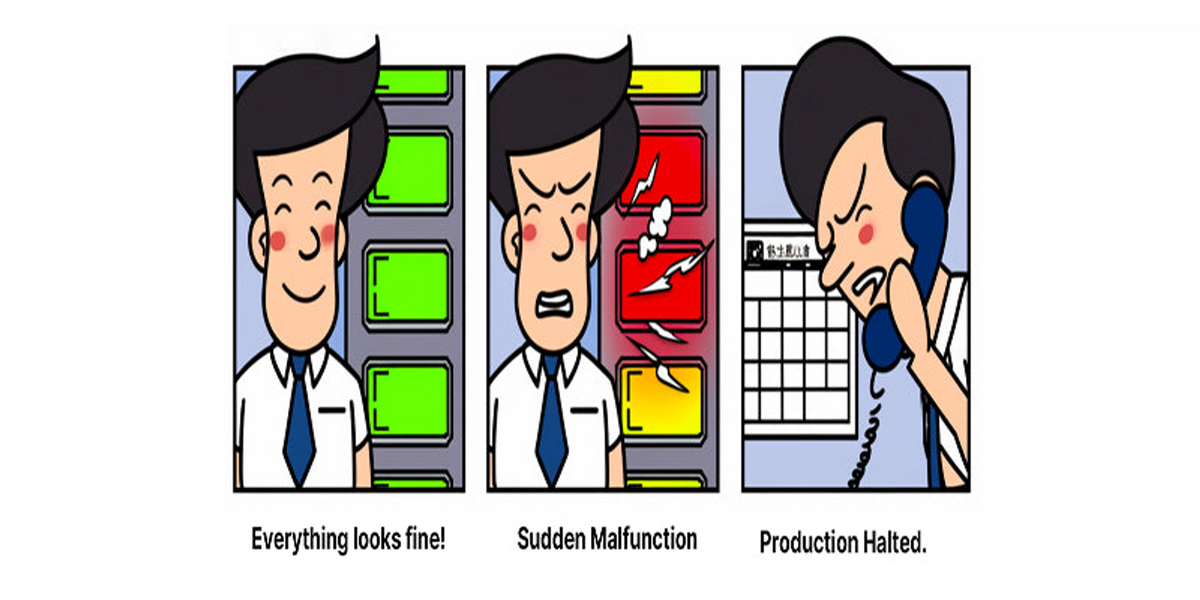
I've walked through countless factories and remote sites, and the story is often the same. A critical piece of equipment—a pump, a motor, a CNC machine—fails without warning. Suddenly, the entire production line grinds to a halt. The frantic calls begin, maintenance teams scramble, and every minute of downtime bleeds money from the bottom line. The data is shocking: in the automotive sector, a single hour of unplanned downtime can cost a staggering $2 million。
For too long, we've been stuck in this "break-fix" cycle. An alarm goes off after the disaster has already happened. But what if you could know about a problem hours, or even days, before it leads to a catastrophic failure? What if your equipment could tell you it was feeling unwell? This isn't science fiction; it's the reality of proactive equipment monitoring, and it's powered by intelligence at the network edge. This is precisely the capability we've built into our Edge2Cloud Pro platform.
Beyond the Breakdown: Your Guide to Proactive Equipment Monitoring
The Problem: Drowning in Data, Starving for Insight
Most modern industrial equipment is already a rich source of data. The problem is that this data is often trapped, unanalyzed, or only reviewed after a failure. Traditional monitoring systems often fail because:
- Alarms are too late: A simple "Machine Stopped" alert is a report of a failure, not a warning. It tells you that you're already losing money.
- Data is siloed: A PLC from one brand, a sensor from another, and a VFD from a third all speak different languages. Getting them to share data for a holistic view is a massive integration challenge.
- Cloud latency: Sending every single data point to the cloud for analysis is slow and expensive. By the time the cloud server detects an anomaly, the critical moment may have already passed.

How Edge2Cloud Pro Builds Your Early Warning System
Edge2Cloud Pro, running on an edge computing gateway, becomes the intelligent hub for your equipment. It creates a proactive equipment monitoring system in three simple yet powerful steps.
Step 1: Listen to Everything (Universal Data Acquisition)
You can't analyze what you can't hear. The first step is to get a complete data picture.
Edge2Cloud Pro’s core strength is its ability to communicate with virtually any industrial device, thanks to its extensive library of over dozens of protocols.
- PLCs: Natively connect to Siemens, Rockwell, Mitsubishi, Omron, and more.
- Standard Protocols: Easily pull data from devices using Modbus, OPC UA, BACnet, and others.
- I/O: Directly monitor digital and analog sensors connected to the gateway.
This capability breaks down data silos instantly, creating a single, unified source of truth for all your assets.
Step 2: Process at the Source (Intelligent Edge Analysis)
This is where the magic happens. Instead of just forwarding data, Edge2Cloud Pro’s powerful stream computing engine analyzes it in real-time, right at the machine.
-
Simple Thresholds: The most basic form of
proactive equipment monitoringis setting simple rules. Through an easy-to-use web interface, you can set an alert like: "If the pump's temperature exceeds 80°C, send a medium-priority email to the maintenance team." - Low-Code Complex Logic (Node-RED): The real power comes from the integrated Node-RED (Robustel Flow). This graphical tool lets you build sophisticated warning logic without programming. Imagine creating a rule like this by just connecting blocks:
"If the average vibration over the last hour has increased by 20% COMPARED to the previous 24-hour average, AND the motor current is also above its normal operating threshold, then trigger a high-priority SMS and voice call alert to the on-call engineer with the message 'CRITICAL: Bearing Failure Imminent on Line 3 Conveyor'."
This is not just an alarm; it's a diagnosis. It’s the difference between saying "the machine stopped" and "the machine is about to stop because of this specific reason."
Step 3: Notify the Right People, Right Now (Actionable Alarms)
An early warning is useless if it gets lost in a crowded inbox. Edge2Cloud Pro ensures alerts are not just sent, but acted upon. By integrating with platforms like our RDMS, alerts can be delivered through multiple channels to ensure they reach the right person, no matter where they are:
- SMS Text Message
- Automated Voice Call
- Platform Notifications (Internal Mail)
Furthermore, these alerts can be linked directly to a work order system, automatically creating a ticket and tracking the issue from detection to resolution.


FAQ
Q1: Do I need a constant cloud connection for the early warning logic to work?
A: No. This is a key benefit of edge computing. All the data analysis and rule processing by Edge2Cloud Pro happens locally on the gateway. An internet connection is only needed to send the final notification (like an email or SMS) once a potential issue has been detected.
Q2: Can I create warning rules based on data from multiple different machines?
A: Yes. Edge2Cloud Pro is a data aggregation platform. You can collect data points from a Siemens PLC, a Modbus temperature sensor, and a separate power meter, and then use all three inputs in a single Node-RED flow to create a highly sophisticated, system-level alert.
Q3: What kind of skills do I need to set up these proactive alerts?
A: Basic threshold-based alerts can be configured through a simple web form with no special skills. For more complex, multi-variable logic, the integrated Node-RED environment provides a low-code, visual drag-and-drop interface. This empowers industrial engineers and technicians to build powerful warning systems without needing to be expert software developers.


Comments
Leave a comment