
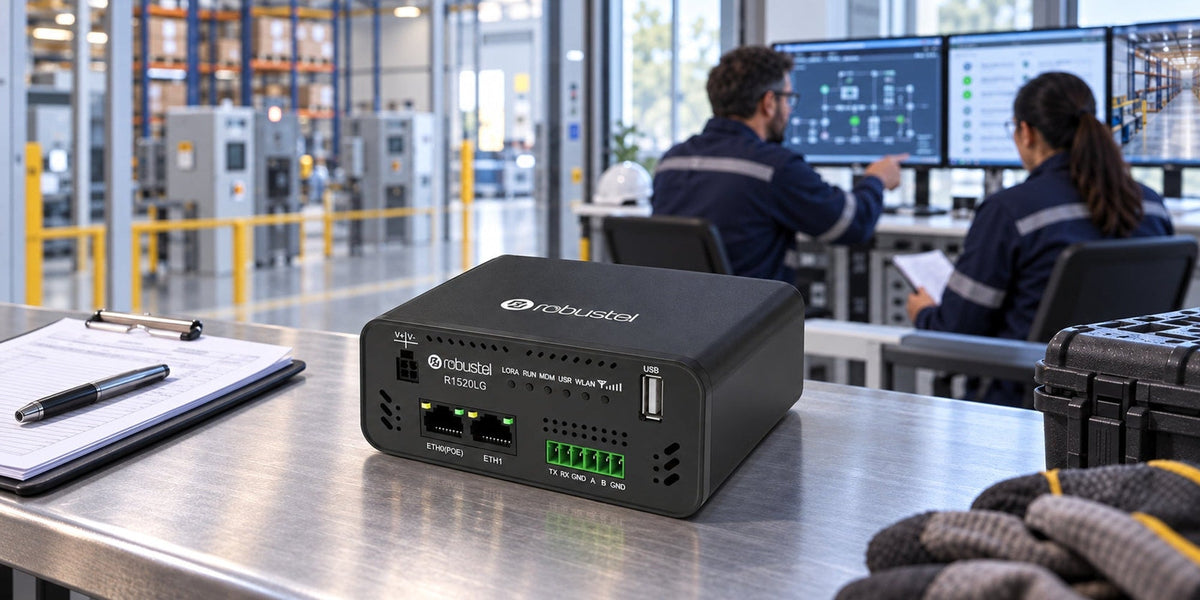
Define a LoRaWAN gateway operations model by assigning owners to gateway health, sensor data, application delivery and controlled changes after installation. A Robustel R1520LG deployment needs more than an accepted commissioning report: operators need to know what normal looks like, what evidence indicates a problem and who can act. Establish separate checks for the gateway and the monitoring service, then connect them through a shared incident record. Review intervals and escalation targets should follow the project's operational needs and tested baseline.

Illustrative operations workspace for a deployed sensor network.
Key Takeaways
- Assign one accountable owner to each operational service and each change path.
- Observe gateway health separately from the usefulness of sensor data.
- Keep a tested baseline and a current record of approved software and configuration changes.
- Make incident handoffs specific enough for the receiving team to continue the investigation.
In This Guide
- What must be handed over after installation?
- Which checks belong to which owner?
- Define the operating baseline for your R1520LG
- How should changes and remote access be managed?
- What should an incident handoff contain?
- Frequently asked questions about LoRaWAN operations
- What should your operations team do next?
What must be handed over after installation?
Build an operating record around the accepted service, not just the gateway serial number. State which assets are monitored, where their readings are expected, who uses the information and how the team recognises an interruption. Include the gateway identity, software baseline, chosen network-server arrangement and responsible support contacts.
Retain a small set of representative commissioning observations. An operator needs to compare a new symptom with the accepted baseline: which sensor was tested, what event was observed and where the resulting data appeared. Keep credentials in the approved credential system and record the authorised access route separately.
Make unresolved limitations visible in the handoff. If a location has not been tested under its representative operating conditions, say so. If an application response depends on a separately maintained integration, name its owner. A handover should preserve the limits of the original acceptance instead of implying that every future use has already been verified.
Which checks belong to which owner?
Use separate observations for the device, network service and application. This makes an alert actionable: “gateway unavailable” and “one sensor has no recent application value” should not automatically start the same investigation.
| Operational question | Suggested evidence | Accountable role |
|---|---|---|
| Is the gateway reachable through the approved management path? | Timestamped device status and last successful access | Network operations |
| Is the intended LoRaWAN service operating? | Relevant service or gateway observations for the selected architecture | LoRaWAN administrator |
| Are the monitored devices producing expected observations? | Sensor identity and most recent accepted event | Sensor service owner |
| Does the application receive usable data? | Source identity, value interpretation and application timestamp | Application owner |
| Are changes authorised and traceable? | Change record, baseline and verification outcome | Change owner |
| Can an unresolved issue be escalated? | Contact, collected evidence and next decision needed | Service coordinator |
Robustel describes gateway status, diagnostics and management functions on the RCMS platform page. Use available device information as one input to the operating record. Confirm the functions enabled for the actual deployment, including any service or access requirements.
The table is a suggested division of responsibility. A small team may combine roles, but each row still needs a named owner. Set review intervals according to the application's tolerance for stale or missing information, then validate that the chosen observations can support the intended response.
How should changes and remote access be managed?
Keep a change record containing the reason, affected equipment, proposed version or setting, access method, restoration plan and success check. Before changing the baseline, identify the representative sensor and application observation that will be used afterwards. A completed update task is one event; an accepted monitoring service is another.
Use the R1520LG firmware resources to review release information. Where an RCMS application package is involved, follow the official compatibility guidance linking the package to the device model and firmware. Keep the installed package identity in the operating record so a later operator knows what was validated.
Check access instructions for lifecycle changes too. Robustel's Remote UI end-of-life notice lists June 12, 2026 as the end-of-service date for the legacy RobustLink Remote UI and directs users toward Remote Access. Update old runbooks that still depend on the retired workflow; confirm the currently supported method for the installed system.

Illustrative review of an approved change before field maintenance.
What should an incident handoff contain?
Describe the affected service and the last successful observation. Include the gateway identity, affected sensor or group, relevant timestamps, software baseline and recent approved changes. Record what remains available: management access, local service visibility, sensor events or application output.
This allows the next owner to begin at the first unresolved stage. For example, if device access is available and a sensor event is visible locally, the application owner should receive that event's identity and time. If the gateway cannot be reached through the approved path, the network owner needs the access and connectivity observations first.
Use the official local activation and uplink procedure as a reference for interpreting those distinct local checks. Avoid turning a historic commissioning result into evidence about today's service state.
After recovery, record the action and the repeated acceptance check. If the incident exposed a missing observation or unclear responsibility, revise the operating record. This turns the repair into a concrete improvement: a better signal, a clearer owner or a documented dependency for the next incident.
Frequently asked questions about LoRaWAN operations
Does an online gateway mean every sensor is working?
Treat gateway reachability and sensor service as separate observations. Check the expected devices and the application's accepted values before concluding that the monitoring workflow is operating as intended.
How frequently should operators review sensor data?
Choose intervals from the operational decision and its tolerance for missing or stale readings. There is no universal interval in this guide; document and test the project's chosen criteria.
Who should own gateway firmware updates?
Assign one change owner who coordinates the network, sensor and application checks. The person executing an update may differ from the person accepting the service afterwards, but both responsibilities should be explicit.
Can we keep using an old remote-management runbook?
Review it against current support guidance. In particular, check whether it depends on the retired Remote UI workflow and replace that step with the applicable, supported access method.
What should your operations team do next?
Create the operating record for one accepted R1520LG installation, assign the six responsibilities and rehearse an evidence-based handoff. Use the R1520LG documentation hub to confirm the baseline and current procedures before applying the model to other sites.
About the Author
Mark, Technical Support Engineer at Robustel
Mark is a Technical Support Engineer at Robustel with hands-on experience in industrial networking and edge connectivity. He helps customers plan, deploy, configure, and troubleshoot industrial IoT solutions, including cellular routers, edge gateways, and LoRaWAN systems. His work spans technical support, product training, configuration review, and practical deployment guidance for reliable and repeatable field operations across global projects and long-term operational support.
Comments
Leave a comment